
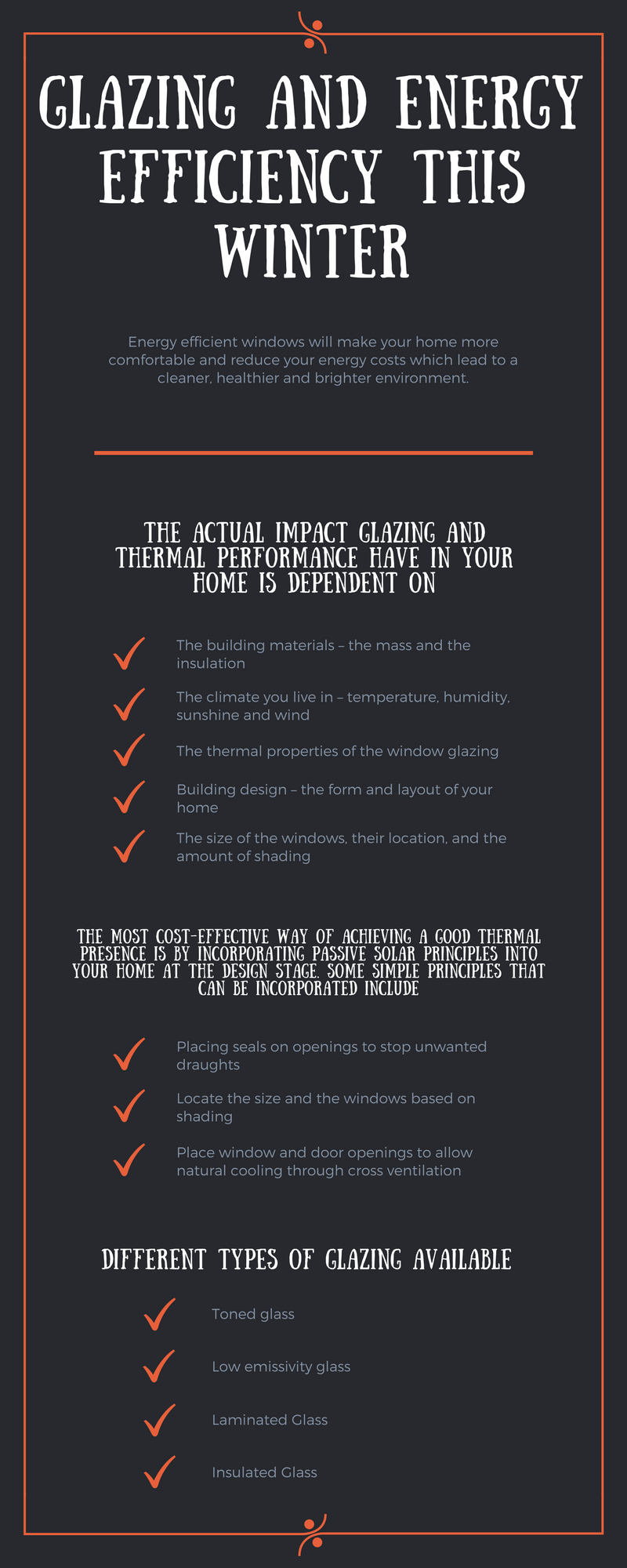
The actual impact glazing and thermal performance have in your home is dependent on –
- The building materials – the mass and the insulation
- The climate you live in – temperature, humidity, sunshine and wind
- The thermal properties of the window glazing
- Building design – the form and layout of your home
- The size of the windows, their location, and the amount of shading
- Placing seals on openings to stop unwanted draughts
- Locate the size and the windows based on shading – to let the sun in when it’s needed (winter) and keep it out when it’s not wanted (summer)
- Place window and door openings to allow natural cooling through cross ventilation
- Toned glass – has a colouring added to it, and comes in colours such as grey, blue, green and bronze
- Low emissivity glass – has either a vacuum deposited thin film metal coating or a pyrolytic coating
- Laminated Glass – has a plastic glazing layer to improve impact performance
- Insulated Glass – is a combination of two or more glazing layers, sealed with a gap between the layers